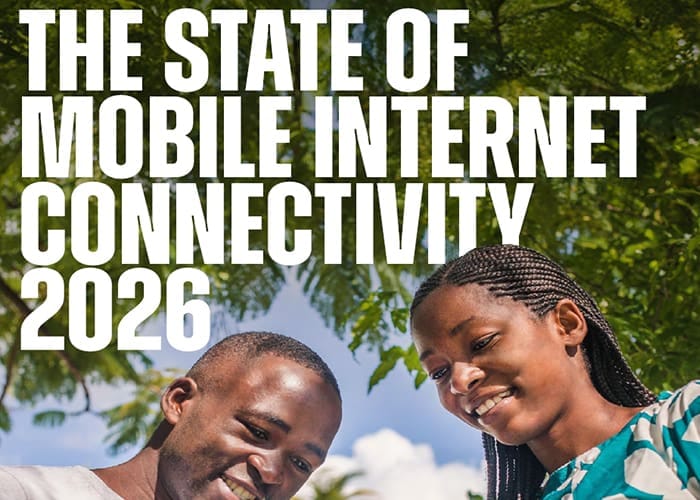
Mobile now connects 59% of the global population to the internet through their own device, accounting for 84% of broadband connections in 2025.1 It remains the primary – in many cases, only – means of accessing the internet in low- and middle-income countries (LMICs). However, 3.4 billion people still do not use mobile internet, and significant digital divides persist.
Those most likely to be digitally excluded – including women, rural populations, persons with disabilities and those with lower incomes or levels of education – are also those with the most to gain from connectivity. As digitalisation accelerates and technologies such as AI reshape economies and societies, it is imperative that the unconnected in LMICs are not left further behind.
Mobile internet enables access to essential services (including healthcare, education, financial services and e-commerce),
supports income generation and is associated with poverty reduction2, 3 and improved livelihoods4 and wellbeing.5, 6 Connectivity is also integral to achieving